
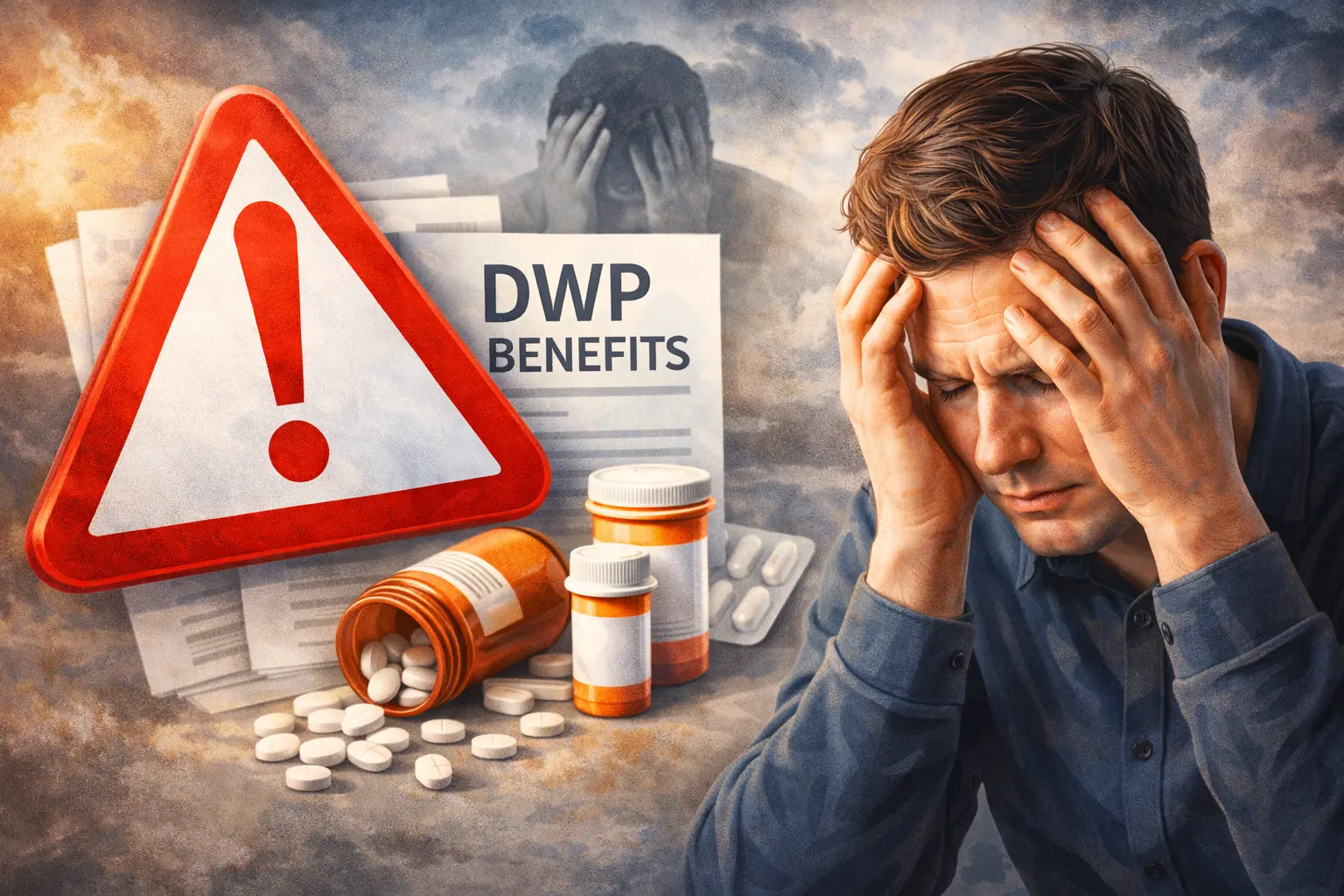
New government data on sickness and disability benefits has reignited discussions in the UK about the rising welfare budget and the increasing number of people classified as unable to work due to health conditions.
Officials and policy experts are now examining the growing trend in claims, particularly those linked to mental health issues, as the government faces pressure to manage welfare costs while continuing to support vulnerable individuals.
Mental Health Conditions Behind Majority of New Claims
Recent figures released by the Department for Work and Pensions show that mental health conditions account for the vast majority of new incapacity-related benefit claims.
Since January 2022, roughly 91% of new applicants have been assessed as having mental or behavioural health conditions.
This marks a substantial shift compared with the situation before the pandemic. In December 2019, about 380,000 people were recorded as claiming benefits for similar conditions.
The sharp rise has drawn attention from policymakers and researchers who say mental health challenges have become a major factor in the UK’s growing disability benefit caseload.
Financial Support for People Unable to Work
Individuals who qualify for incapacity-related benefits may receive additional financial assistance to help manage daily living costs.
Government data suggests that around four out of five claimants receive up to £5,000 annually in extra payments, and many are not required to actively seek employment due to the severity of their health conditions.
These payments are intended to provide financial stability for people whose physical or mental health makes regular work difficult or impossible.
Disability Benefit Costs Expected to Climb
Projections from the Office for Budget Responsibility (OBR) indicate that government spending on sickness and disability benefits could rise significantly over the next decade.
According to current forecasts, annual spending in this category could reach approximately £110 billion by the early 2030s.
Several factors are contributing to the expected increase, including:
-
A growing number of claimants
-
Long-term health conditions affecting working-age adults
-
Increased recognition and diagnosis of mental health disorders
Political Pressure to Control Welfare Spending
The rising cost of the welfare system has become a major issue in British politics.
The current Labour government is facing growing calls to find ways to control the overall welfare budget while continuing to provide support for those who need it.
Chancellor Rachel Reeves has come under criticism as debates intensify about possible measures to reduce welfare spending without harming vulnerable claimants.
Balancing financial responsibility with social support remains one of the government’s most challenging policy issues.
Experts Call for Changes to the System
Some policy experts believe reforms could help more people with health conditions re-enter the workforce.
The Centre for Social Justice, a policy think tank, has argued that the current system may leave too many people dependent on long-term benefits.
Joe Shalam, the organisation’s policy director, warned that large numbers of people remaining outside the labour market could create long-term economic and social consequences.
He suggested that many benefit recipients still have valuable skills and could return to work if the right support and opportunities were available.
UK Welfare Spending Continues to Expand
Overall government spending on benefits and pensions continues to grow.
New estimates indicate that the UK’s welfare bill will reach around £333 billion this year.
The increase in spending is being driven by several factors, including:
-
Higher numbers of disability and sickness benefit claims
-
Increasing pension payments
-
Benefit adjustments linked to the rising cost of living
Analysts say the total welfare budget could grow by around £18 billion in just one year, reflecting both demographic changes and economic pressures.
Ongoing Debate About Health and Employment
Experts say the rise in disability benefit claims reflects broader societal changes rather than a single cause.
Several issues are believed to be contributing to the increase:
-
Long-term health impacts of the COVID-19 pandemic
-
Greater awareness and diagnosis of mental health conditions
-
Economic pressures affecting working-age adults
-
Changes in work environments and job demands
However, policymakers remain divided on how to address these trends while ensuring that people with genuine health challenges continue to receive necessary financial support.
The debate highlights the difficulty of balancing economic sustainability with social welfare protection.
FAQ
What share of new incapacity benefit claims involve mental health conditions?
Around 91% of new claims since January 2022 have been linked to mental or behavioural health disorders.
Which government department manages sickness and disability benefits?
These benefits are administered by the Department for Work and Pensions (DWP).
How much could disability benefit spending reach in the future?
Forecasts suggest annual spending could rise to about £110 billion by the early 2030s.
What is the estimated size of the UK welfare budget this year?
Government spending on benefits and pensions is expected to reach approximately £333 billion.
Why are disability benefit claims increasing?
Experts point to several reasons, including mental health challenges, economic stress, and long-term effects of the COVID-19 pandemic.